|
|
|
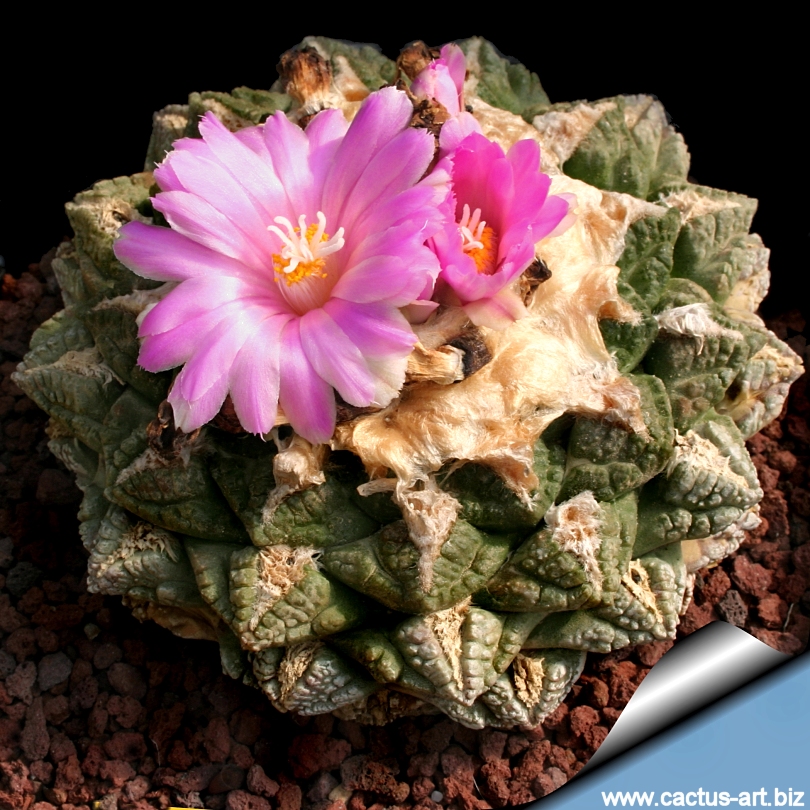
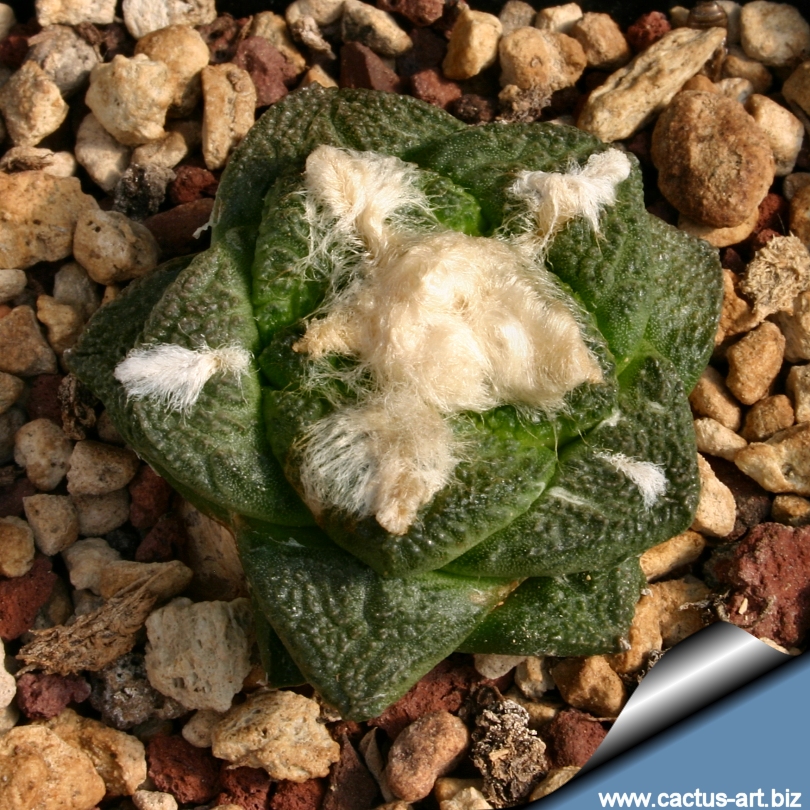
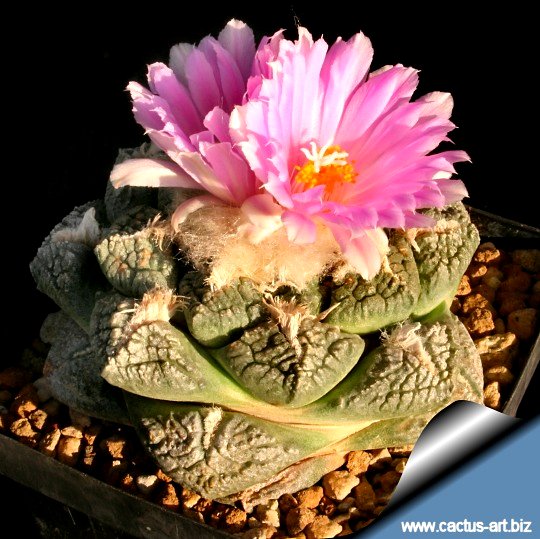
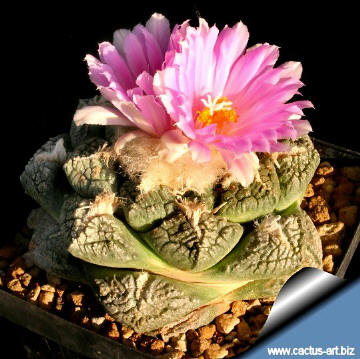
Ariocarpus fissuratus, diameter 12cm (36 years old)
|
Description: A. fissuratus is a
geophyte plant that produces a star-shaped
rosette of fleshy,
deltoid to hemispheric
tubercles, which have no
spines and lie almost flat on the
soil surface. The tubercles, about as long as
wide, are closely packed and form a coarse mosaic.
Exposed faces of tubercles, deeply fissured on either side of
the central
areolar groove, are coarsely
rugose, and are often sharply angled apically;
and
with a lateral longitudinal furrow on each side
of the tubercle, along the edge.
The
areoles are up to 3 mm wide, sometimes
confined to middle of tubercle faces instead of extending to tips. They
are usually
solitary, rarely giving rise to side
shoots from old areoles, they grow extremely slowly,
to 20 cm in diameter.
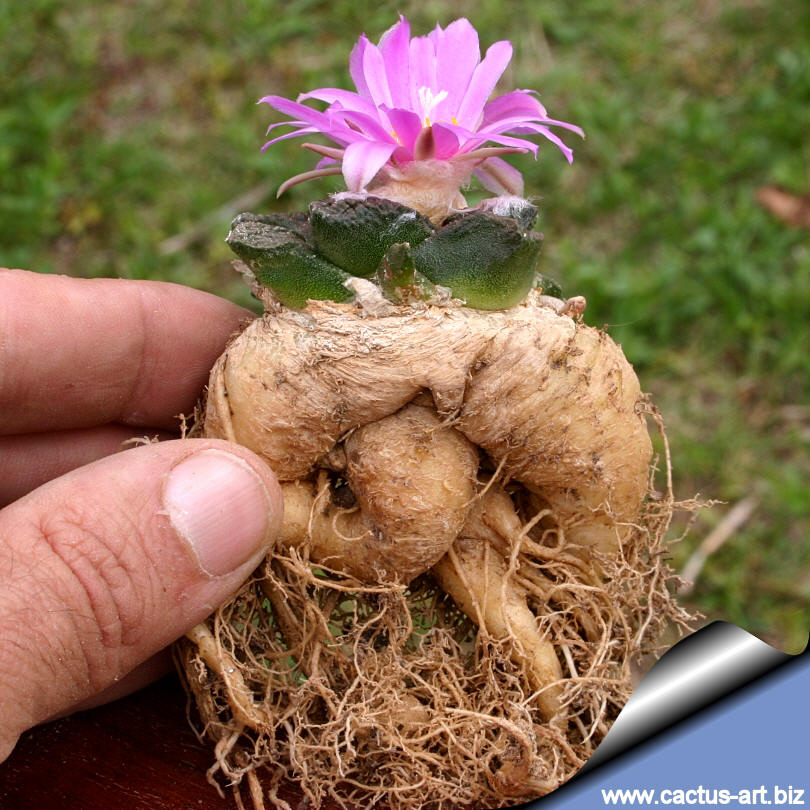
Each plant has a large
turnip-like taproot, which lies below the soil surface and serves
for
water storage.
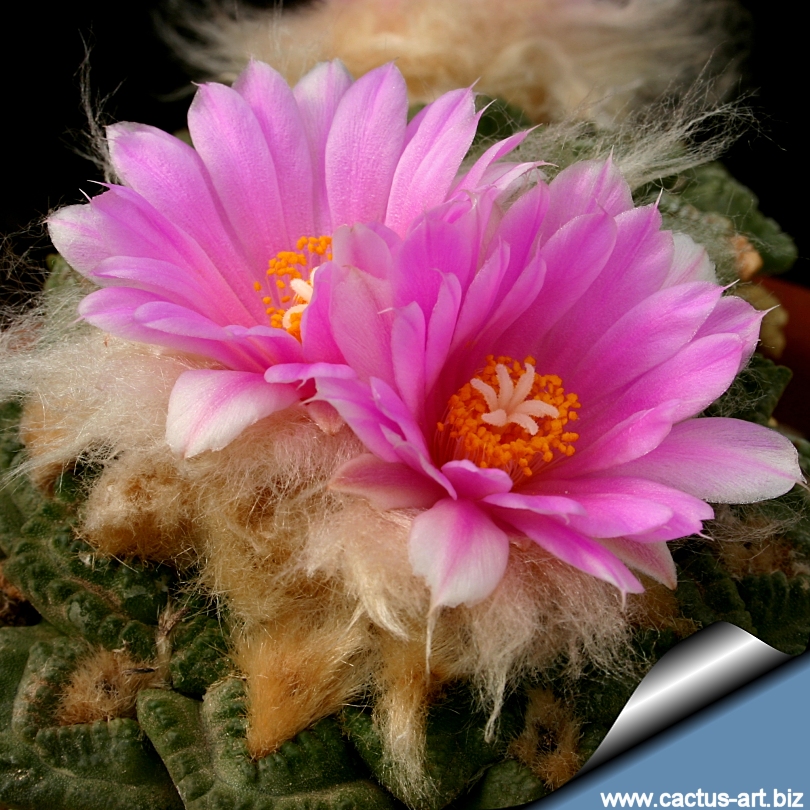
Flowers: These plants have a
woolly
crown, from which emerge bright pink-violet
flowers up to 2.5-5 cm, 2 times wider than long when fully expanded.
Flowers last for 3 to 4 days.
Blooming time October, November.
Fruits: white or green,
with lots of
seed.
|
|
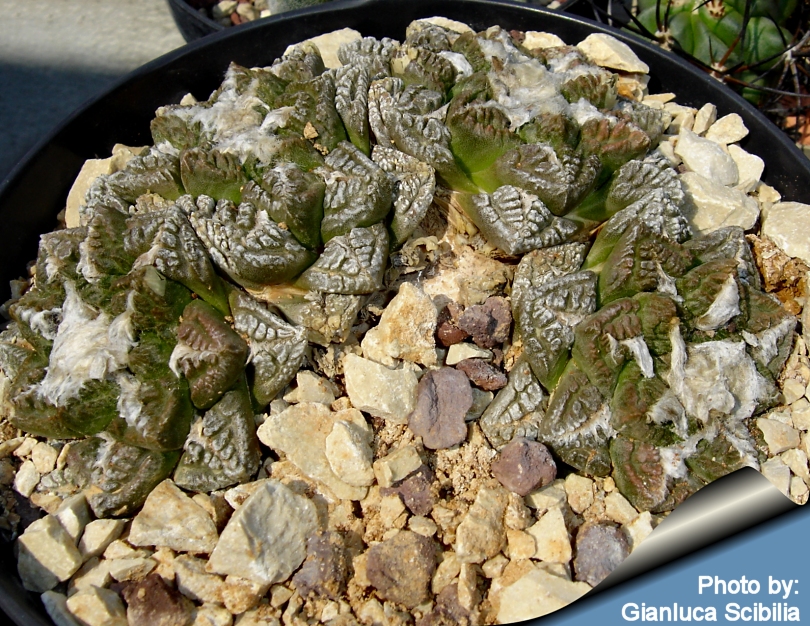
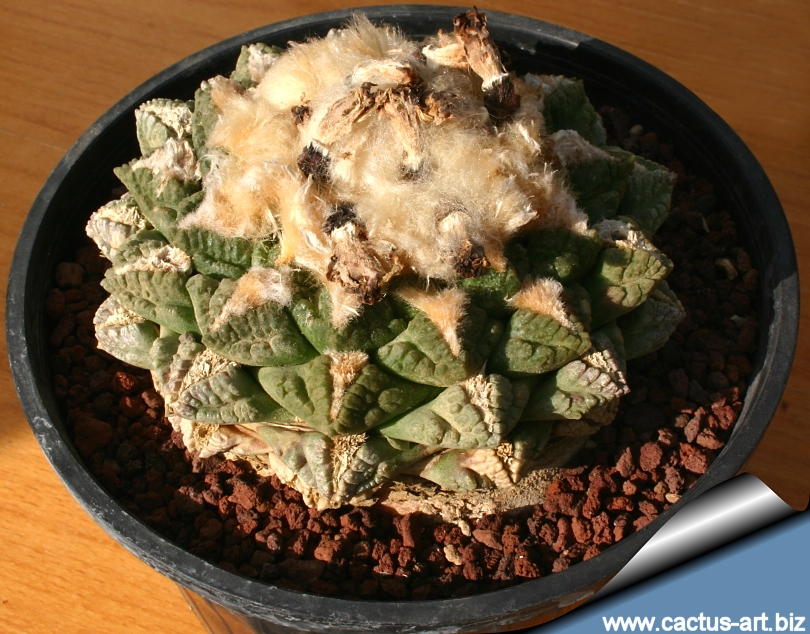
A young specimen (10 years old) in the transition between
subadult and
adult phase. |
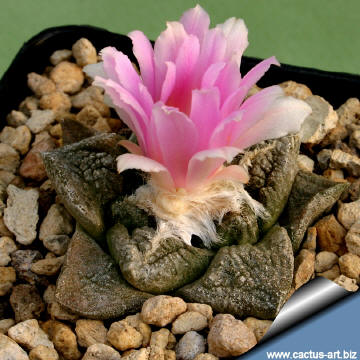
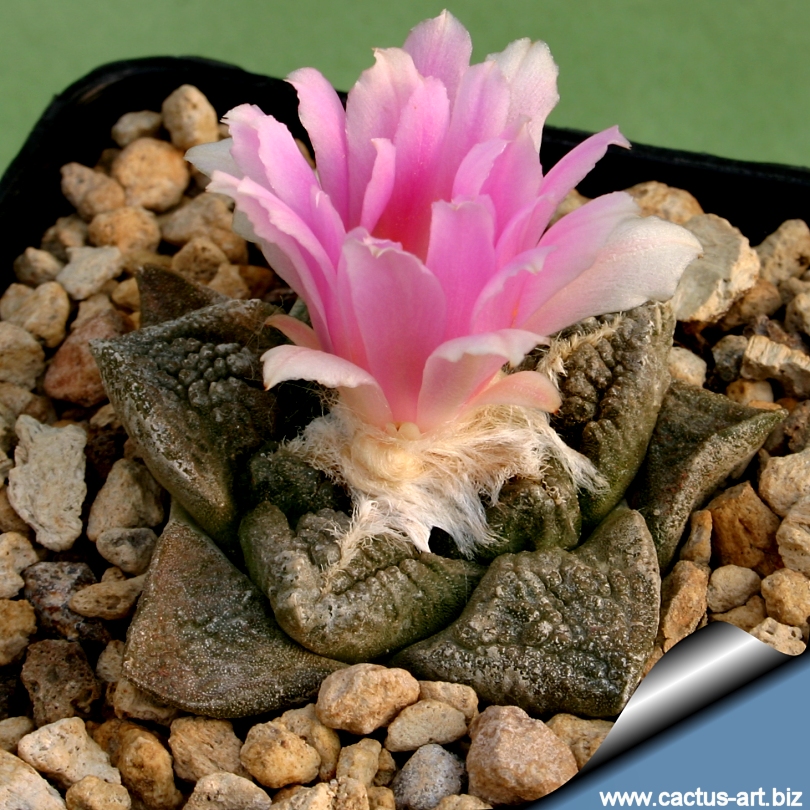
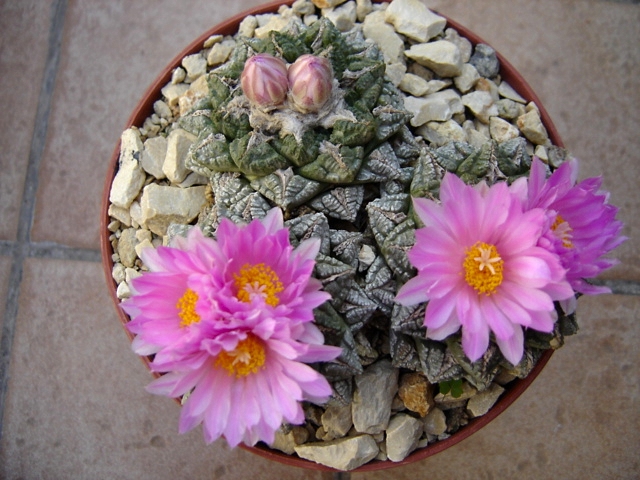
A blooming specimen (about 13 years old )
This is one of the slowest growing species |
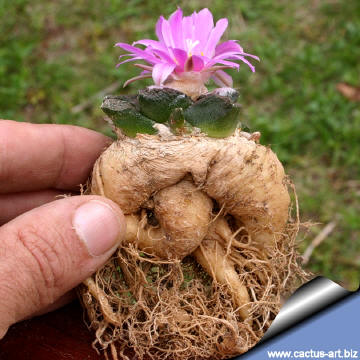
A. fissuratus SB413 Brewster co, Texas, USA |
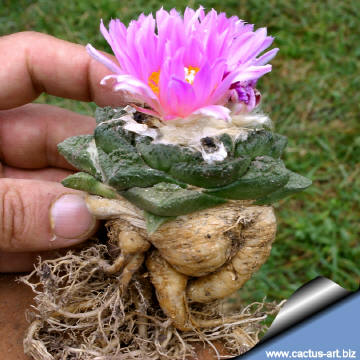
A. fissuratus SB413 Brewster co, Texas, USA |
|
 |
 |
|
. |
|
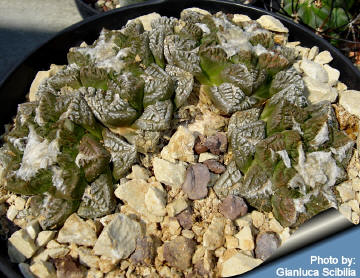
Photo & © Copyright by Gianluca Scibilia (Italy) |
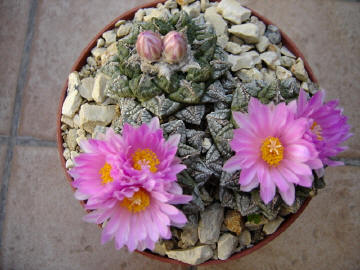
Photo & © Copyright by Gianluca Scibilia (Italy) |
|
. |
|
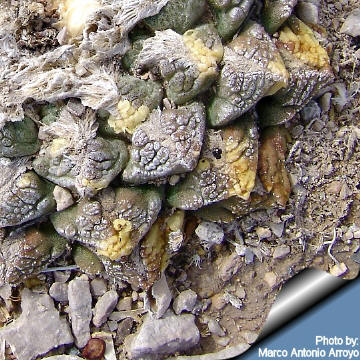
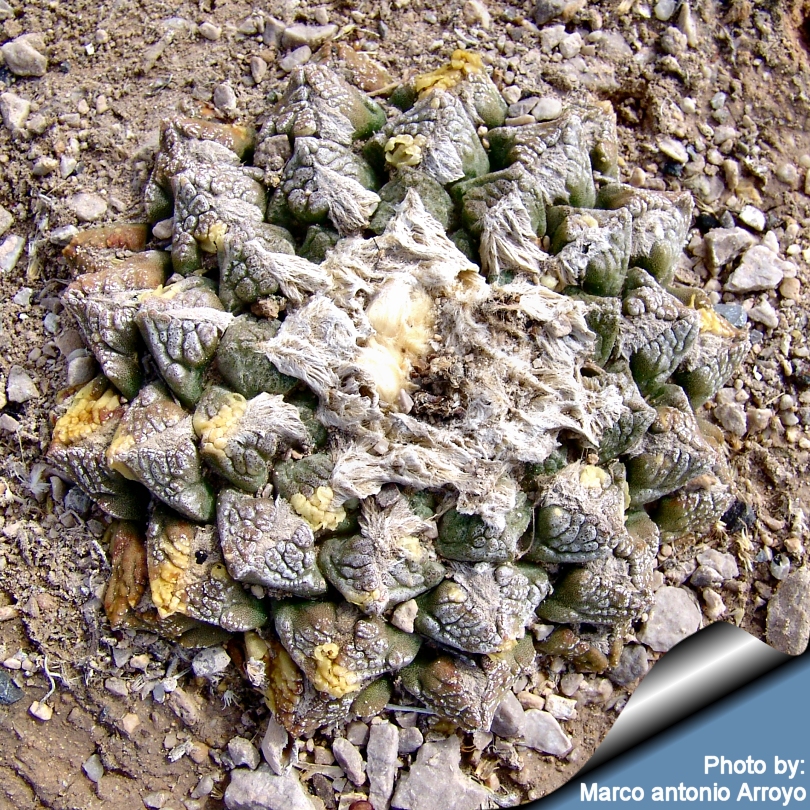
( Photo and © Copyright by
Marco Antonio Arroyo - Mexico ) |
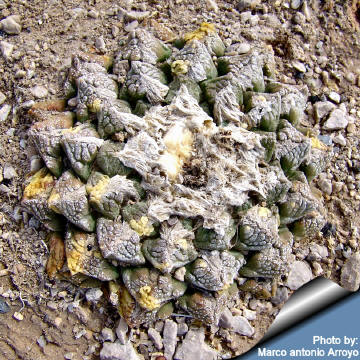
( Photo and © Copyright by
Marco Antonio Arroyo - Mexico ) |
|
The
tubercles resemble the colours and
patterns of the
soil surface, and act like
they're
limestone chips.


|
|
Propagation:
By
seeds, remembering that
seedlings dislike strong
light and
dry conditions, and need to be
repotted frequently. Eventually, as they become mature, they reach a
maximum size of 25 to 27 cm. However, old plants become
senile and have a tendency to succumb to
disease and a weak
root system. At this
stage, as is well known, they
die suddenly. So, after they reach 20 cm in diameter grow them
slowly, and adopt a new repotting period, using intervals of every 2 - 3
years. Additionally grow them under drier conditions or with stronger
sunlight. Plants are often
grafted to accelerate growth, as they would generally take at least a
decade to reach
maturity on their own. But the grafted plants are typically rather
tall- growing, compared with plants on their own roots, that are usually
flatter to the
ground. A. fissuratus starts blooming
at the age of 8-12 years.
Advertising |
|
|
|
|
Family:
Cactaceae (Cactus
Family)
Scientific name:
Ariocarpus fissuratus (Engelm.) K. Schum.
Origin: USA (Texas, New
Mexico), northern Mexico (Coahuila, Chihuahua and Durango)
Habitat and
Ecology:
These plants are
characteristic of dry
limestone ridges and low, rocky hills of limestone
chips at an
altitude of 500-1500 m among the Chihuahuan desert
scrub.
The
stems are normally flush and well
camouflaged with the soil
surface resembling limestone chips in shape, colour, and texture,
rendering the plants extremely
cryptic. They are greyish-green in
colour, sometimes taking on a yellowish tint with age. These
cacti are
difficult to spot in their natural habitat. When they are found, it is
usually due to their pinkish flowers
In times of severe
drought, the whole
above-ground portion of these
plants can
shrink and be covered by rock fragments, but the
taproot
remains
alive. Many exist as only small, isolated
populations, and are in
danger of
extinction because they sought by plant
collectors. For this
reason they are protected plants in the regions where they occur.
Conservation status: Listed in
CITES appendix I.
Synonyms:
- Roseocactus fissuratus
- Mammillaria fissurata
- Anhalonium fissuratum
Heterotypic synonyms:
- Ariocarpus fissuratus var. lloydii
- Ariocarpus lloydii
- Roseocactus intermedius
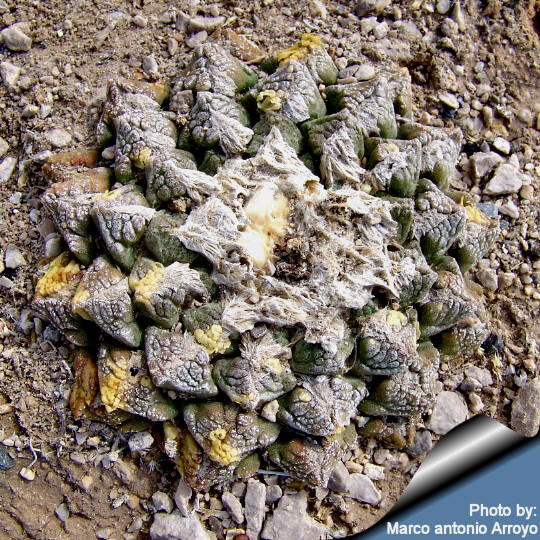
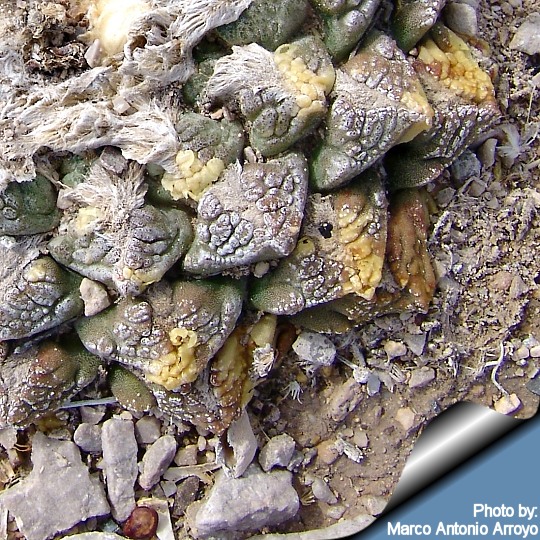
Photo and © Copyright by Marco Antonio Arroyo - Mexico )
The
mimetic colouring of a plant in its natural
habitat in Cuatro Cienegas, Coahuila -
Commonly called "living rocks," these cacti usually blend in well with
the terrain around them. Sought by collectors,
they can take up to 50 years
to reach their full growth of 15cm in diameter.
|
|
|
|
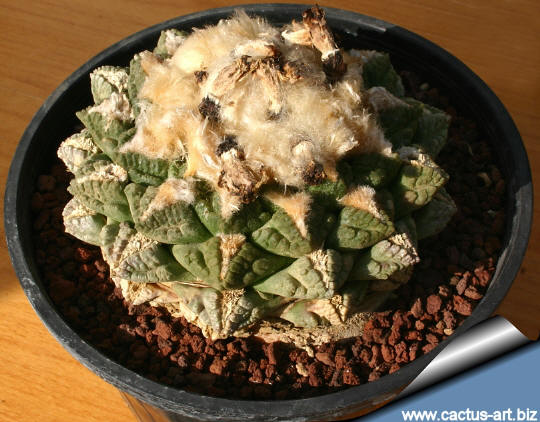
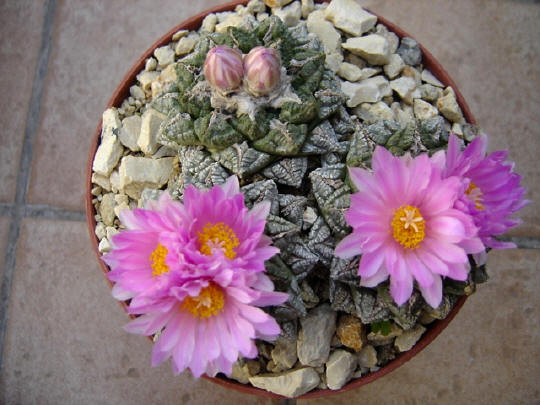
Photo & © Copyright by Gianluca Scibilia (Italy)
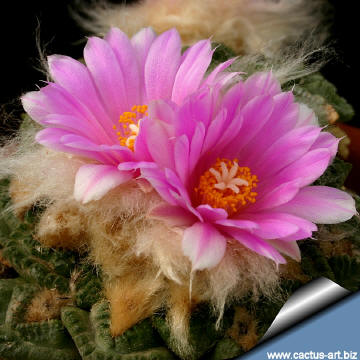
Flowers are rich-pink to magenta, and last for 3 to 4 days.
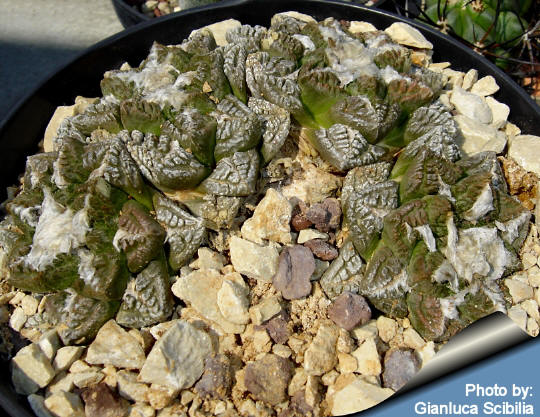
Photo & © Copyright by Gianluca Scibilia (Italy)
Cultivation is not too difficult in a
greenhouse, although
A. fissuratus grows extremely slowly. The plants need deep
pots to
accommodate the
napiform unit formed by the
stem base and the rootstock
(or they will often simply crack your pots), , and a loose
mineral soil
with a well-drained
substrate. They need a good amount of
light, a
place near the roof of the greenhouse helps drying the pot after
watering. This can be done weekly during
the
summertime, if the weather is
sunny enough, with a little
fertilizer added.
Kept this way, plants will
show a
healthy, although slow
growth. They are
frost hardy to -10°C
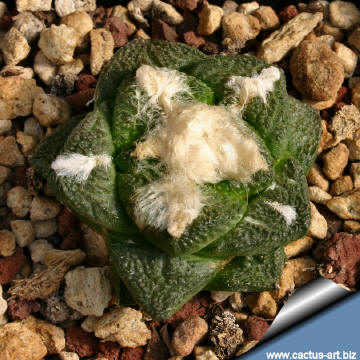
Photo of conspecific taxa,
varieties, forms and cultivars of plants
belonging to the Ariocarpus fissuratus/bravoanus
complex
(This
Taxon has lots of synonyms whit
several controversial varieties and subspecies):
|
|


 Cultivation and Mail Sale